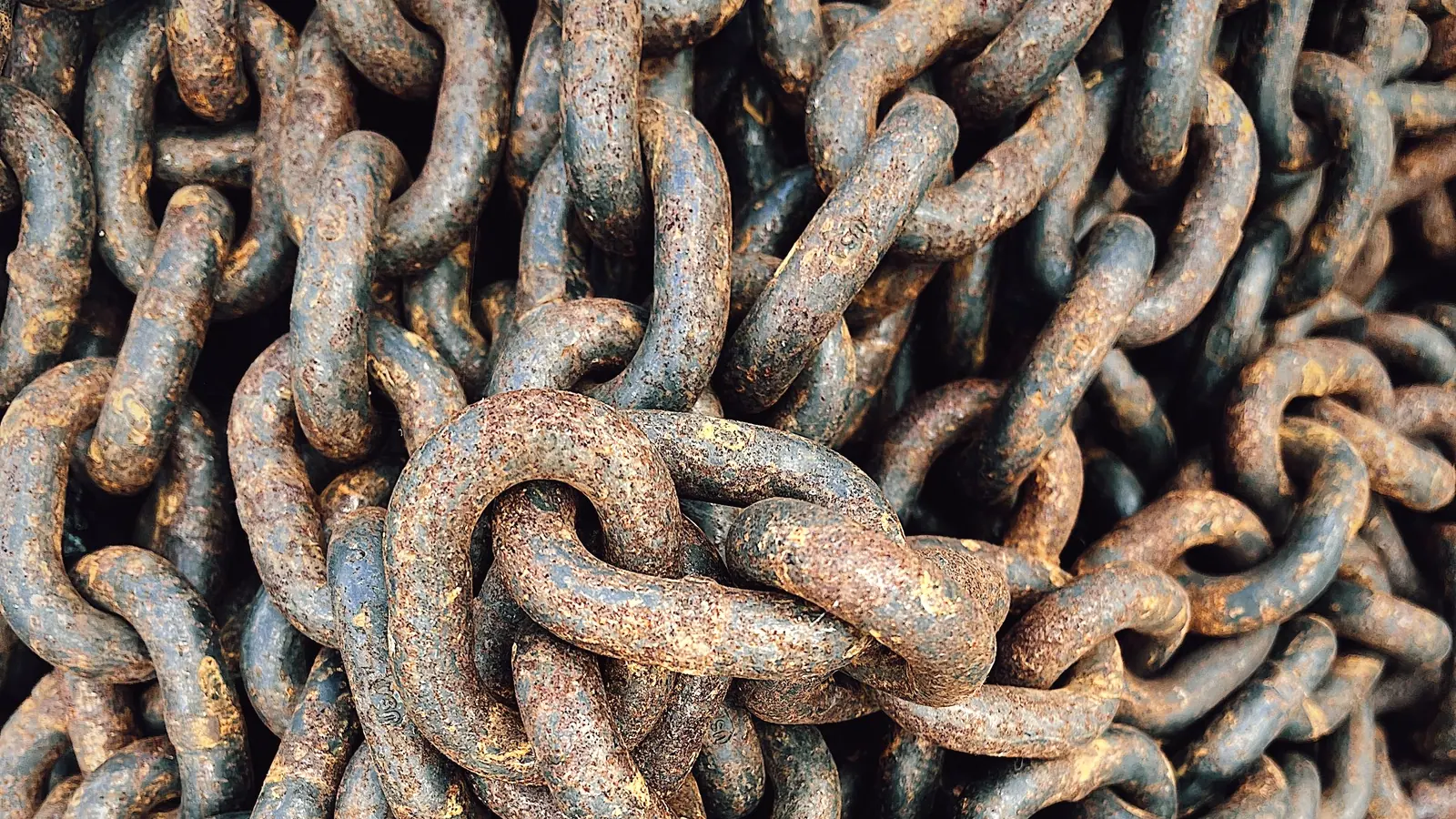
Anchor chain is one of the few items on a vessel where a substitution is invisible on the quay and consequential at sea. Two lengths of the same nominal diameter can look the same, weigh the same, and be certified to very different loads.
This is what to check before signing, and why the paperwork matters as much as the steel.
Grade is not a quality label, it is a load
Stud link anchor chain is supplied in grades — commonly U2 and U3, with U1 now rare. The grade denotes the material strength, and for a given diameter it determines the proof load the chain is tested to and the breaking load it is certified for.
The critical point for a purchaser: a higher grade at the same diameter carries a higher load, and a lower grade at the same diameter carries less. Substituting U2 where U3 was specified does not deliver a slightly inferior product — it delivers chain certified for lower loads than the design assumed, in an item whose whole purpose is holding the vessel.
Because diameter is what everyone quotes and grade is what everyone assumes, this is where substitution happens. If a quotation says "76mm chain" without a grade, it is not yet a quotation.
Class certificate against works certificate
These are not the same document and the difference decides whether the chain is acceptable at survey.
A works certificate is the manufacturer's own statement of what they made and how it tested. It is issued by the party with a commercial interest in the result.
A class certificate is issued in connection with a classification society — LR, ABS, BV, DNV, NK and others — under their survey arrangements. It carries the society's identification and references the rules the chain was made and tested to.
For chain being fitted to a classed vessel, the class certificate is the one that matters. A works certificate can accompany it, but it does not replace it. If what arrives is a works certificate where class certification was specified, that is a rejection, not a paperwork detail to sort out later.
Traceability: heat numbers and lengths
A certificate is only useful if it can be tied to the steel in front of you.
Chain is manufactured from identifiable heats of steel, and certification references those heat numbers together with the lengths and their identification. Individual lengths carry markings, and those markings are what connects the physical chain to the document.
The check: can you match the markings on the delivered lengths to the certificate? If the certificate describes a production run and the chain cannot be tied to it specifically, you have a document about some chain rather than a document about this chain. At the next survey that distinction is the entire point.
This is worth doing at delivery. Tracing it afterwards, once lengths are ranged and joined, is far harder.
What to look at physically
Certificates describe what left the works. A visual inspection describes what arrived.
- Studs. Every stud present, seated properly, and secure. A loose or missing stud is a rejection — the stud is what stops the link deforming under load.
- Welds. Flash line consistent along the length, no visible cracking, no obvious undercut or lack of fusion at the weld.
- Surface condition. Mill scale and light surface rust from transit are normal. Deep pitting is not, and it matters most where links bear on each other.
- Deformation. Links out of shape, or measurably stretched, from mishandling or a previous overload.
- Consistency. Chain that changes appearance along its length may not all be from the same production.
Also check the accessories were quoted and supplied: joining shackles, swivels and end shackles are separate items with their own certification, and they are frequently the thing that is missing when the chain arrives.
Mooring tails and wire
The same principle extends across the mooring outfit. What is checkable, and should be stated on the enquiry:
- Construction — for wire, the number of strands and wires and the core type; for synthetic tails, the fibre and construction.
- Minimum breaking load, certified, not nominal.
- Length and termination — eyes, thimbles, splices, and who made them.
- Certification tied to the specific item, exactly as for chain.
Mooring lines are also an area where documentation is checked in service, so a line that arrives without traceable certification creates a problem that outlives the purchase.
What a good enquiry states
- Diameter and grade — never diameter alone.
- Total length required and how it is to be supplied in lengths.
- Whether class certification is required and, if so, to which society.
- Accessories: joining shackles, swivels, end shackles, and their certification.
- Delivery port, vessel and dates, and whether lifting is available at the receiving end — chain is heavy and awkward, and handling is part of the job.
An offer that answers all of those can be compared with another offer. One that quotes a diameter and a price cannot.
We quote anchor chain, mooring gear and their accessories against the grade and certification the enquiry names, and state plainly where an item offered differs from what was specified. See Anchors, Chains & Mooring and Deck & Engine Stores, or send the requirement through our contact form.
Updated 7 September 2026